Role
Full-stack developer
Realtime · Multiplayer games · 2026
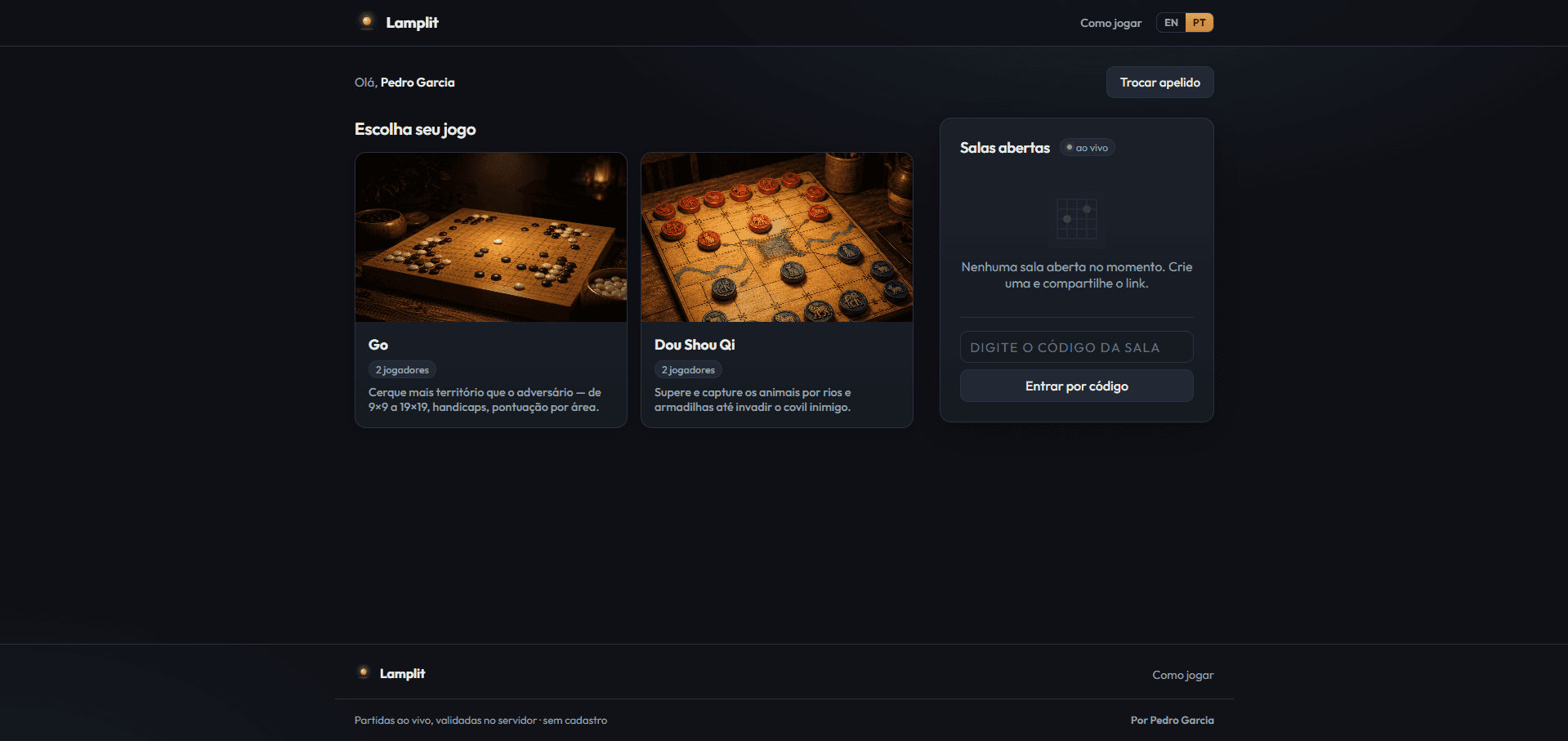
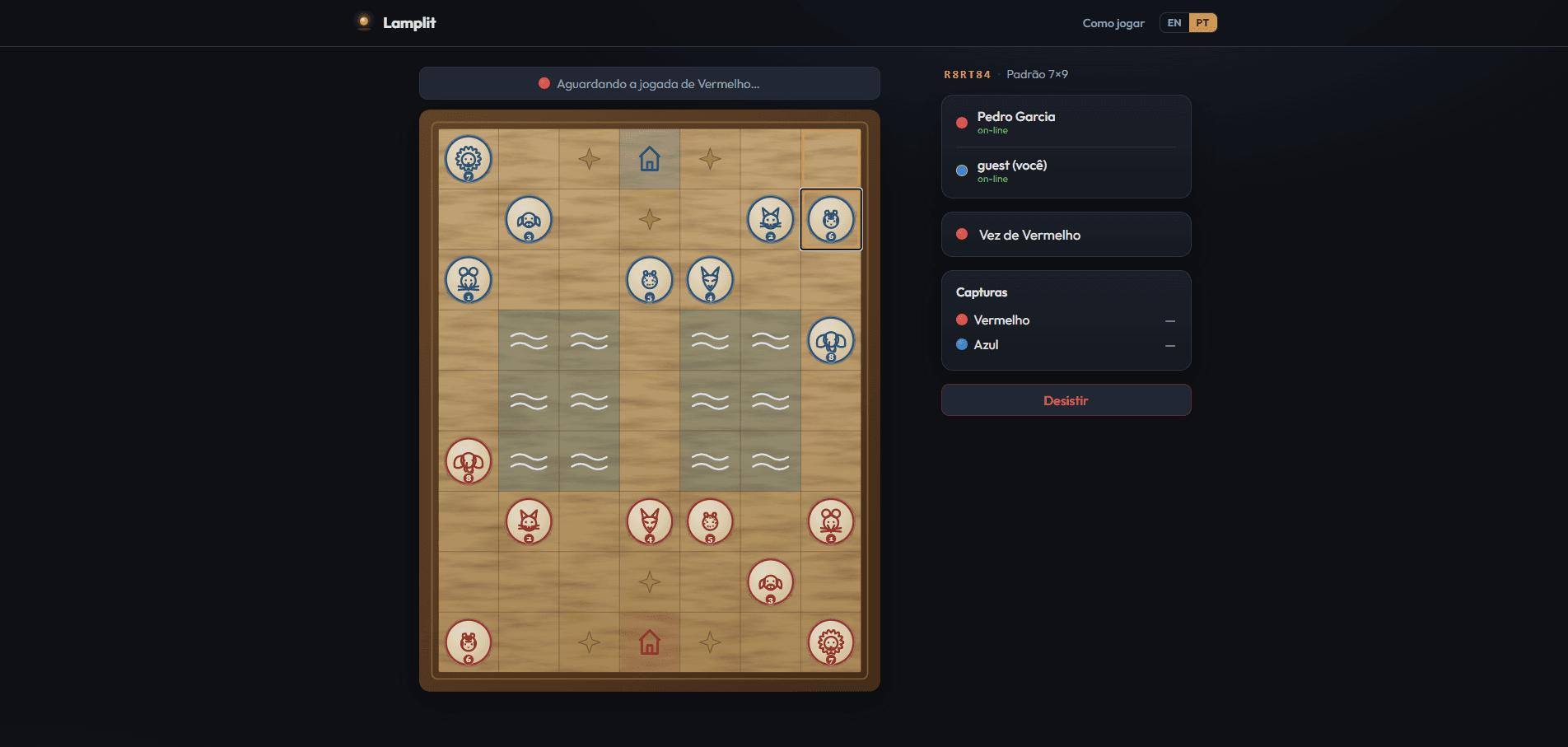
Two players join a room and play a fully validated match in real time. The server rules on every move and broadcasts each board state from a single source of truth, on an engine designed to add new games without a rewrite.
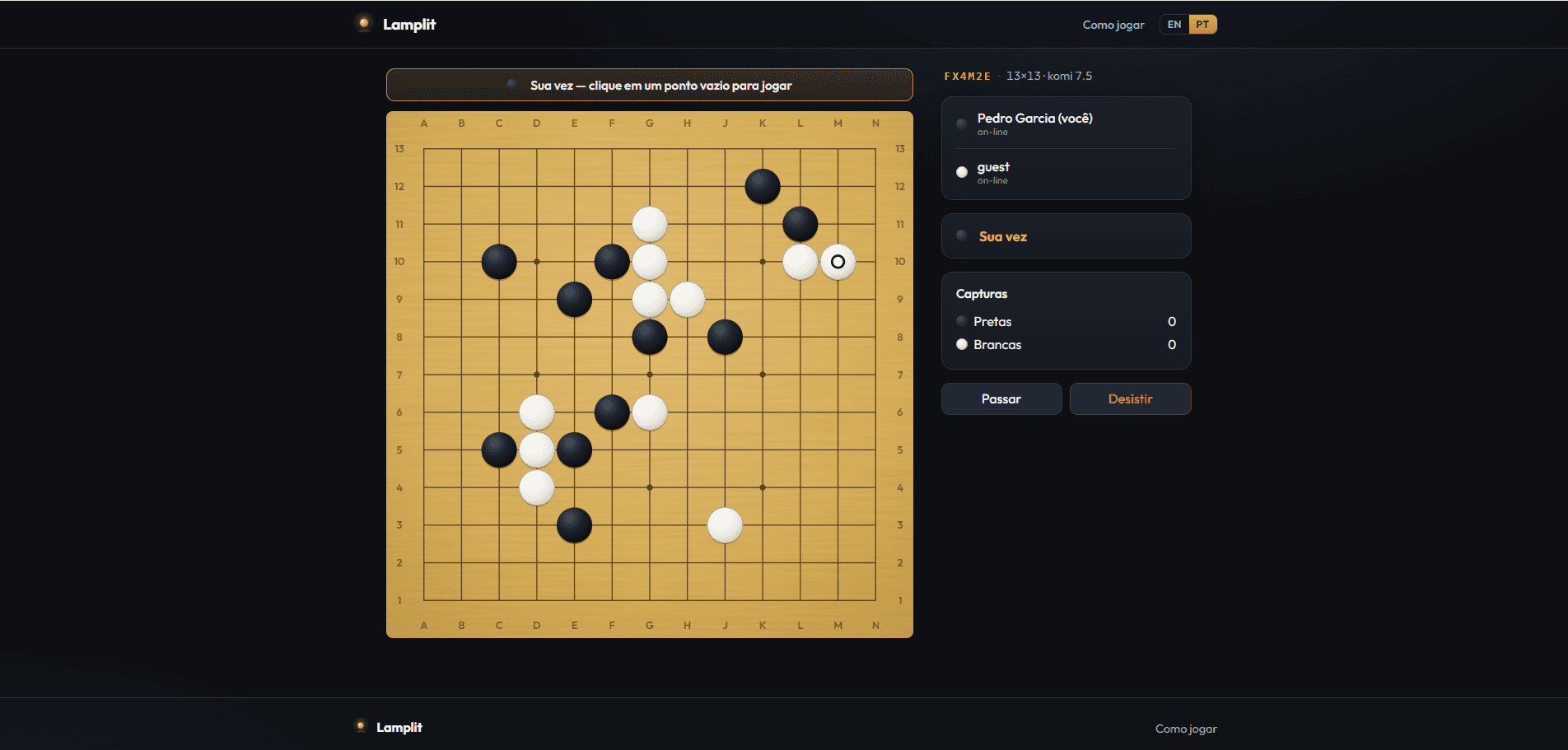
The platform began as a real-time Go (Baduk/Weiqi) game and was deliberately refactored into a multi-game engine — it already hosts Dou Shou Qi, and the architecture is built so that adding new games is a first-class extension point, not a rewrite. The Go server is the single source of truth: clients never trust each other, every move is validated against a pure rules engine, and the resulting state is broadcast to both players over WebSockets.
REST handles only session and room lifecycle; all live gameplay and the lobby feed happens over WebSockets. Each game's rules engine is pure and deterministic — no I/O — so it round-trips through JSON snapshots that the store persists and rehydrates, with a pluggable in-memory or PostgreSQL backend chosen at compile time.
The hardest part was keeping two parallel state machines in sync: the engine phase (playing → scoring → finished) that governs move legality, and the persisted room lifecycle that drives the lobby and rehydration. Routing every transition through a single set of choke-point methods, each holding the right lock, kept the live game and its stored record from drifting apart. The same discipline is what makes adding a game safe instead of risky.